Age of Empires III: The Asian Dynasties
Summary
Age of Empires III: The Asian Dynasties is the second expansion for the wildly successful Age of Empires III. Command the mighty and unique forces of Japan, China, and India as you explore the rich cultures of the East. Lead samurai warriors, Chinese banner armies, and powerful war elephant units while constructing legendary wonders. Age of Empires III: The Asian Dynasties is the second expansion for the real-time strategy game Age of Empires III, created in partnership by Ensemble Studios and Big Huge Games, and released by Microsoft Game Studios. The Mac edition was adapted, developed, and published by Destineer's MacSoft. It follows the initial expansion, The WarChiefs, and adds three new civilizations: China, Japan, and India. The update also includes new characters, story-driven campaigns, additional maps, and fresh game modes.
Storyline
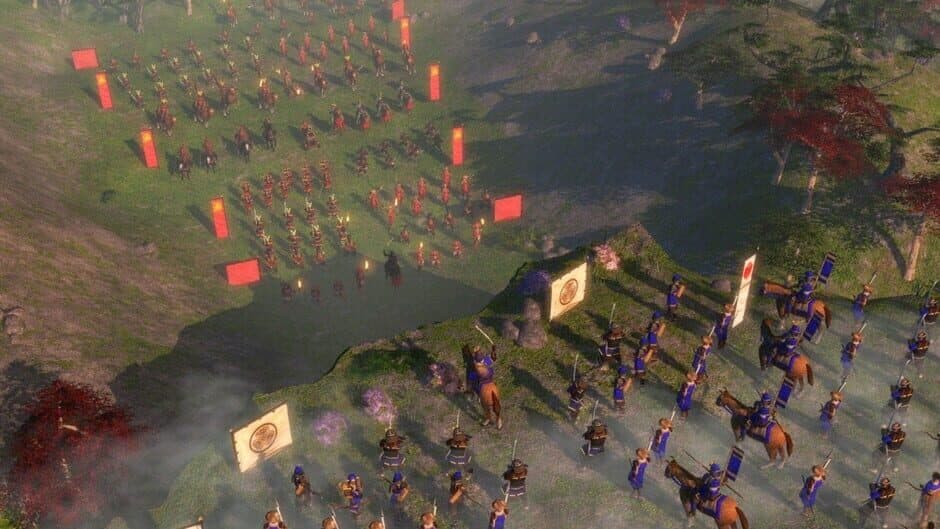
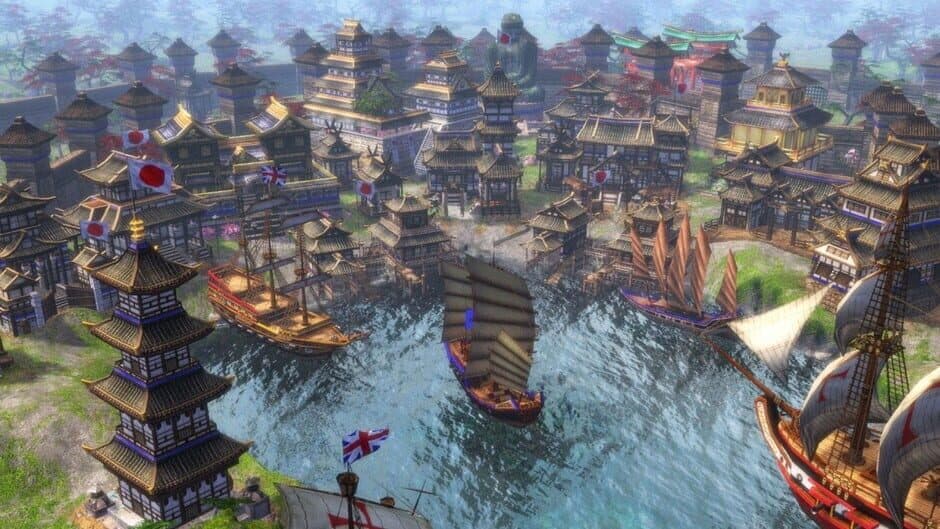
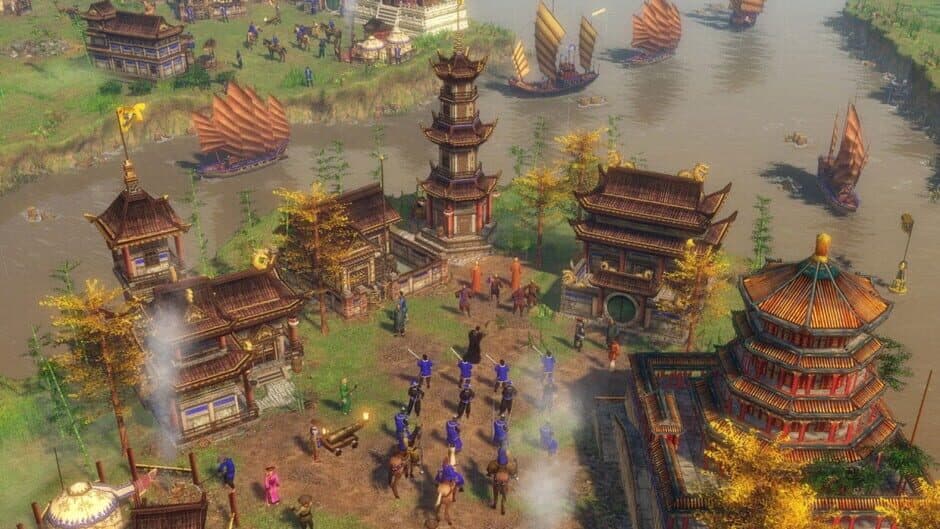
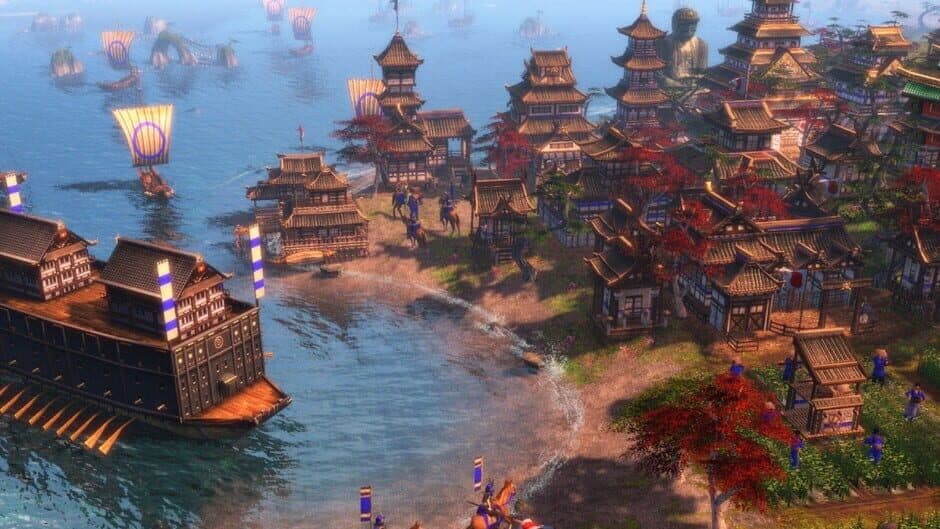
Campaigns There are three brand-new campaigns, each tied to a new civilization. These campaigns mark a return to the historical, civilization-focused single-player style seen in earlier entries of the Age of Empires III series, differing from the previous narrative approach. Each one includes five brand-new scenarios and is the first in the series to not center around the fictional Black family. Japanese Campaign — The Japanese campaign revolves around the unification of Japan (a theme also featured in a scenario from Age of Empires II: The Conquerors), the rise of the Tokugawa Shogunate, which the player leads, and a young general named Sakuma Kichiro. It is said that when Kichiro was an infant, Tokugawa Ieyasu rescued him from the ruins of his destroyed village and raised him as his adopted son. The campaign begins with Kichiro meeting Daimyō Torii Mototada during the siege of Osaka (set in 1600 instead of 1615) to capture the 5-year-old heir of Hideyoshi. Kichiro and Mototada join forces with local villagers and storm the castle. They then travel to the north-east of Honshu to eliminate villages supporting Tokugawa’s rival, Uesugi Kagekatsu, and defeat his army. After suffering heavy losses in the battle, Mototada learns that Tokugawa’s main threat, Ishida Mitsunari, is attacking his estate in Fushimi, forcing Mototada to return there. Meanwhile, Kichiro leads his weary army westward to secure control of the Tokaido Road trade route. After the battle, a defeated Oda clan samurai tells Kichiro that Tokugawa has lied to him since childhood. Enraged, Kichiro kills the samurai but is deeply unsettled by the revelation. He returns to Mototada at Fushimi and asks for the truth about his origins. Mototada explains that although it was Tokugawa who destroyed his village and sentenced his parents to death, he urges Kichiro to remain loyal, explaining that Tokugawa has always admired his skills and placed great trust in him for unifying Japan. Kichiro stays loyal and supports Mototada in the upcoming battle at Fushimi. After Kichiro helps evacuate non-combatants, he is forced to leave Mototada to fight alone. As the enemy breaches the final defenses, Mototada commits seppuku. Kichiro joins Tokugawa at Sekigahara. After their victory in the Battle of Sekigahara, Tokugawa reflects on his achievement in becoming Shogun and asks Kichiro what he, as a general, gained from it. Kichiro replies, “the truth,” without mentioning what he learned about his past. The campaign ends with Kichiro riding alone, accompanied by a voiceover from Mototada on the importance of loyalty to one’s master. Chinese Campaign — The Chinese campaign loosely follows the 1421 hypothesis and tells the story of a Chinese treasure ship discovering the New World before Christopher Columbus. The narrative centers on Jian Huang, a Ming captain who has always dreamed of exploring the world, and his new friend and partner, Lao Chen, a strong, rough, and powerful sailor, who are tasked with helping expand the Ming Empire. In the initial version of the game, the player's emblems and unit models represent the Qing Empire, even though the campaign is set during the Ming era. The treasure fleet is attacked by Wokou pirates while still being built. On the orders of Admiral Jinhai, the spoiled and self-centered nephew of the unnamed emperor, Huang and Chen save the fleet and eliminate the pirates. The fleet then sets off westward and is next seen arriving at a port on the Indian coast. There, many of the crew, including Huang and Chen, are attacked by soldiers of the Indian Zamorin and retreat with part of the fleet to a nearby island, where they establish a new base and launch a rescue mission to save Jinhai and the remaining crew, who have been captured by the Zamorin’s troops and some Chinese defectors. The fleet continues west under Jinhai’s insistence, despite many ships turning back, and is eventually stranded in the Yucatán after a storm. Chen and Huang go to rescue the crews of the other ships from hostile Aztec soldiers. Upon returning, they discover that Jinhai has gone missing. Huang suspects he was captured along with many of the crew and organizes a rescue mission. Huang and Chen push through the jungle and save many of their comrades, but Jinhai is nowhere to be found. Huang’s small force of sailors then enters a nearby Aztec city, where they learn that Jinhai has declared himself an emperor or perhaps a god among the Aztecs and that he was the one who conspired with the Zamorin in India. Huang and Chen escape an ambush by Jinhai’s soldiers and flee back to the coast through a series of caves, rescuing more of their crew along the way. Once back at the coast, they set up a base and launch a counterattack, defeating and killing Jinhai. After the battle, Huang, Chen, and the surviving crew members clear the beaches of all evidence of their presence and sail back to China, hoping that no one will ever know they were there. Indian Campaign — The Indian campaign is based on the 1857 Indian Rebellion and follows a situation similar to Chayton Black’s in The Warchiefs campaign: "Shadow." The main character is Subedar Nanib Sahir (a name combining Nana Sahib), a member of the Sepoy regiments serving the British East India Company, who gradually becomes disillusioned by its harsh treatment of Indian citizens. The campaign begins with Nanib and his superior, Colonel George Edwardson, regaining British control of the saltpetre trade in the Punjab. Nanib and Edwardson then march south to Calcutta and defeat the roaming bands of arsonists there. At the end of the battle, Nanib convinces a group of arsonists to lay down their arms and leave, but Edwardson’s men ambush and massacre them, deeply affecting Nanib. The conflict over Nanib’s loyalty reaches a peak when he and his men are ordered by Colonel Edwardson to use new Enfield Rifles, despite the cartridges being greased with beef tallow and pork fat, which is considered taboo by the Hindu and Muslim sepoys. Nanib fires a near-miss shot at Edwardson (based on a similar event involving Mangal Pandey), killing one of his soldiers. Nanib and fellow sepoy Pravar Patel then lead their regiment in an attack on the local Company fort by targeting weapon caches to cause fires and explosions under its foundations. After their victory, Nanib and Pravar quickly rally the local citizens and sepoys, gathering a massive force. Although Nanib denies being the leader of the revolt, he and Pravar decide to rescue Bahadur Shah II from British captivity when the Shah declares himself the supreme ruler of India. They sneak into Delhi at night and destroy weapon caches to trigger elephant stampedes, which help them break through the city gates. Along the way, they find more rebels who assist them in fighting through Delhi, freeing the Shah and escaping into the night. Nanib then leads his forces in an assault on a Company fort commanded by Colonel Edwardson. Nanib captures or destroys the saltpetre sites and plantations supplying Edwardson’s forces inside the fort and repels three counterattacks. Finally, he attacks the fort and captures its outer defenses, including the fixed guns, mortally wounding Edwardson in the process before destroying the fort’s command post. When the battle calms, Nanib approaches a dying Edwardson, who curses the Indians and claims the Company is far more powerful than all of India. Nanib replies by explaining that no military force can extinguish the Indians’ passion for their homeland. After Edwardson dies, Nanib and Pravar prepare for a long and costly war against the Company, and three rebel sepoys are seen lowering the Company’s flag from a nearby flagpole.