
Age of Wonders III
Triumph Studios
★
6.3
50 user ratings
★
7.1
55 critic ratings
★★★★★★★★★★
VOTES
55
Summary
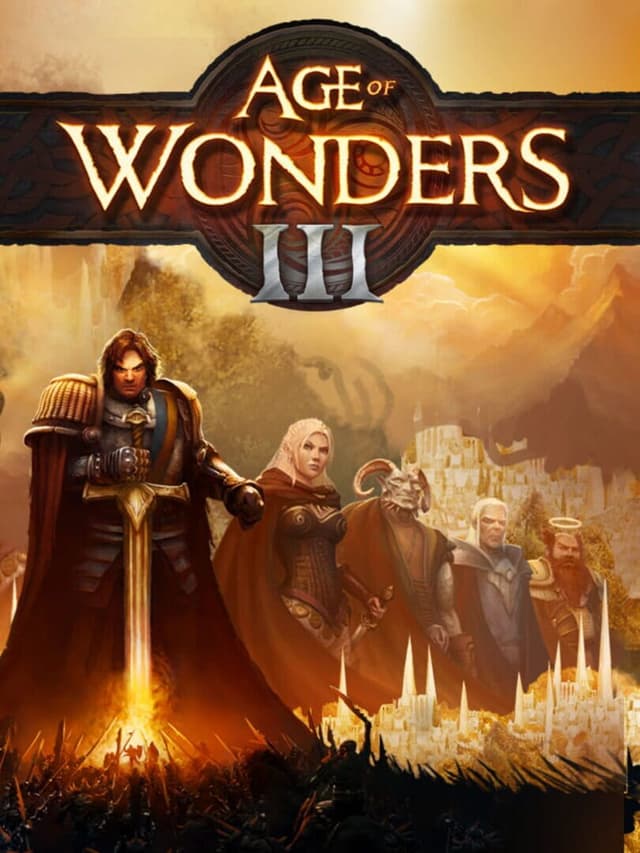
Age of Wonders III, like its predecessors in the series, is a turn-based strategy game set in a high fantasy world where players take on the role of a political and military leader. The gameplay follows a 4X model—explore, expand, exploit, and exterminate—as players traverse the world map, gradually building an empire through colonization, warfare, and diplomacy with rival factions. A new addition in Age of Wonders III is the inclusion of more role-playing game elements, requiring players to first select and personalize their leader, with all options tailored to the player's preferred playstyle. The initial release features six playable races: humans, draconians, high elves, dwarves, orcs, and goblins, each determining the race of the player's empire and offering unique abilities and advantages. The leader and empire are further defined by the selection of skill sets based on classic RPG classes, along with additional specializations and abilities to choose from. Each leader class also has access to exclusive units with a distinct visual style that reflects their race, supporting their unique strategic approach in both combat and empire management. At launch, there are six leader classes to choose from. The "Sorcerer" class focuses on magic, using enchantments and summoning powerful units. The "Theocrat" leads a society rooted in organized religion, commanding zealots and holy warriors while casting divine spells. The "Rogue" prefers indirect methods, using stealth, theft, and manipulation, as well as dark magic in both diplomacy and battle. The "Archdruid" draws strength from nature, making them highly self-sufficient and capable of summoning wild creatures. The "Dreadnaught" commands a steampunk-inspired civilization, relying on industry, machinery, and gunpowder-based units such as cannons and tanks. Lastly, the "Warlord" excels in direct combat, using non-magical units and tactics to dominate the battlefield. Leaders and individual hero units can earn experience and level up, gaining new gear and abilities as they progress. The player's alignment between good and evil is shaped by their actions and the cultures they incorporate into their empire, rather than being determined by race as in earlier games. Cities serve as key sources of resources, infrastructure, and unit recruitment. The world map also features independent cities and units not directly controlled by any player. Units from unaffiliated cities will defend their territory and retain loyalty to their home. Many of these settlements are not traditional cities but unique locations, such as a "Giant's Keep." Players can conquer these territories to gain access to units, or absorb them through diplomacy by offering tribute and maintaining favorable diplomatic or alignment status. Independent forces and cities may also assign quests to the player, such as clearing out hostile units, searching for relics, or capturing settlements. Completing these quests can earn the support of independent factions, along with rewards like gold or equipment, sometimes offering a choice of what the player receives. Like the first game in the series, Age of Wonders III includes a story-driven campaign that can be played from two perspectives: the human-led Commonwealth Empire and the High Elf Court. In addition to the campaign, the game offers single-player scenarios, online multiplayer, randomly generated maps, and a map editor. The visuals in Age of Wonders III are presented in 3D, a departure from the isometric perspective used in previous entries in the series.
Storyline
Before the events of the first game, the elven court was nearly destroyed by the humans, an invading species that had only recently arrived on the Blessed Continent. The elves fractured into two opposing groups. Meandor, the son of the murdered king Inioch, took command of the dark elves and the Cult of Storms, a faction determined to eradicate the human race. Inioch’s daughter, Julia, led the wood elves and the Keepers, a group that sought coexistence rather than annihilation. These two sides, along with others, fought fiercely in the Valley of Wonders, surrounding the remains of the fallen elven court. The High Elves emerged many years later when Julia married a dark elf and brought their divided peoples back together. At the same time, the Commonwealth Empire was born from a union of various races seeking protection and the exchange of knowledge. While it began with noble goals, once its expansion was complete, the humans took control and accelerated the development of technology and trade. The Commonwealth Empire aims to replace the old traditions and integrate all of the world under its rule. The Elven Court opposes this, striving to unite the ancient races in resistance against imperial overreach, forming the core conflict of Age of Wonders III.
Screenshots
Artwork
Supported languages
| Audio | Subtitles | Interface | |
|---|---|---|---|
| English (US) | ✓ | ✓ | ✓ |
| Français | ✓ | ✓ | ✓ |
| Deutsch | ✓ | ✓ | ✓ |
| Polski | ✓ | ✓ | ✓ |
| Русский | ✓ | ✓ | ✓ |
Similar games
Alternative titles
- Age of Wonders 3— Alternative spelling
- AoW3Launcher.exe— Windows Executable