Indianapolis 500: The Simulation
Papyrus Design Group
Publisher: Electronic Arts

★
8.0
13 user ratings
★
8.0
13 critic ratings
★★★★★★★★★★
VOTES
13
Summary
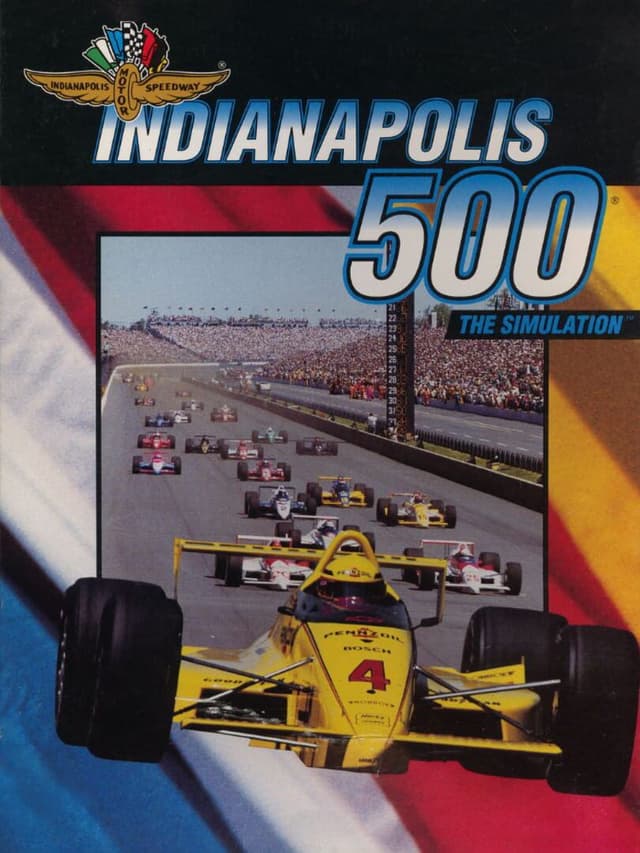
Indianapolis 500: The Simulation is a 1989 computer game that marked a significant shift in racing games, moving them from the arcade style into the realm of realistic racing simulation. Created by the Papyrus Design Group, a team led by David Kaemmer and Omar Khudari, and published by Electronic Arts, the game was initially released for DOS and later made available for the Amiga in 1990. Indianapolis 500: The Simulation aims to deliver an authentic experience of the Indianapolis 500, featuring 33 cars and a true-to-life Indy car driving sensation. During the race, players are limited to a first-person viewpoint, though the game also includes a replay function. The title allows for detailed car setup, with adjustments directly influencing the vehicle's performance and handling. The game's lineup is presented with accuracy, and the qualifying order mirrors the 1989 Indianapolis 500 starting grid.
Storyline
There are also practice and qualifying modes. Practice allows players to adjust and test car setups in real time. Opting out of the qualifying session means starting at the rear of the grid. The qualifying session consists of four laps, with the average of those lap times determining the starting position. No damage can be sustained by the player's car during practice, though other vehicles may be on the track, and their wreckage will remain if the player's car collides with them. Car damage is possible during qualifying. The available cars include a yellow Penske-Chevrolet, a red Lola-Buick, and a blue March-Cosworth, with the Penske offering the fastest default configuration (though with proper tuning, any of the cars can perform competitively). During Practice, various settings can be adjusted using menus linked to the Function keys F3–F10. The player's car is always assigned the number 17. The theme music for Indy 500 was composed by Rob Hubbard, who was newly appointed as a music director at Electronic Arts at the time.
Screenshots
Release dates by platform
| DOS | December 31, 1989 |
| Amiga | December 31, 1990 |